Chaining emissions down
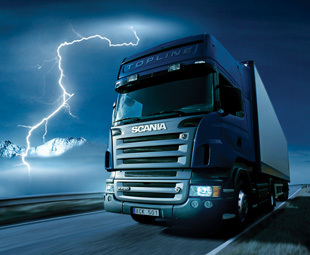
Our planet has shrunk, with goods moving across earth’s surface daily by truck, which means a higher concentration of greenhouse gases. FOCUS digs deep into the implications and discovers that supply chain management offers some solutions to the high costs associated with road transport
According to Louise Naudé, national climate change officer at World Wildlife Fund (WWF) South Africa, “Our country’s greenhouse gas problem can be attributed mainly to our coal-intensive power stations and our coal to liquids processes.”
She adds however, that transport is the fastest growing source of emissions in South Africa. “Industrial emissions still outstrip emissions from transport at the moment, which offers the industry a fantastic opportunity … it can go in a different direction so as not to overtake other sources of emissions.”
Naudé points out that it is vitally important that we curb our emissions: “It is crucial for humanity to do this as fast as possible. We are seriously running out of time, as can be seen from the extreme and unusual weather that we’re experiencing … And, it is all happening much faster than we expected.”
However, she says that we can still turn this around, or limit the damage and the extremity of what is going to happen. “It is very urgent that we do this as fast as possible,” Naudé reiterates.
And the transport industry has stepped up to the plate, as it does its part to curb CO2 emissions and drive down costs in the logistics functions it provides to supply chains. “We’re aware of some really good initiatives by fleet and logistics operators,” Naudé tells FOCUS.
One example is what Imperial Logistics and Woolworths are doing with their loads management, she explains. “They’ve said that you shouldn’t have a truck travelling in one direction full and then going back empty,” Naudé points out. “So the truck might travel in one direction to deliver goods to stores, but then it collects the fresh goods from that area on the way back.”
It makes business and environmental sense not to have empty vehicles driving around as they emit unnecessary CO2 and don’t generate revenue. But the routes that full vehicles take also play a major role in profits and the emission of greenhouse gases … A wrong turn can land a driver on a congested road, driving all over the place – which will make the delivery late, clients angry and wastes fuel.
Johannesburg-based logistics consultant, Pathfinder Logistics Solutions, an agent for the logistics software system LogiX, adds that by strategically planning routes that cover the shortest distance possible, the LogiX Suite promotes fuel efficiency and helps to reduce carbon emissions.
“Nearly one fifth of the world’s greenhouse gas emissions are in the atmosphere because of vehicles,” Pathfinder Logistics Solutions points out. “This means that global implementation of transport schemes that are dedicated to fuel efficiency, will go a long way towards reducing carbon emissions, and will have an extremely positive effect on the global warming crisis facing our generation.”
 But the benefits don’t end there, as fewer kilometres travelled means less wear and tear on vehicles and that cargo will reach its destination as quickly as possible.
However, working on some other supply chain management factors can also make transport managers’ jobs easier and improve their bottom-line profits.
Paragon Software Systems – provider of truck routing and scheduling software solutions, based in Dallas in the United States – says that you should look at how your customers are allocated to your distribution centres (DCs). This allows you to determine the best network of DC locations to satisfy your customers’ service requirements.
“Paragon’s Fastnet is a network modelling tool that lets you determine the best network of distribution centres and depots to satisfy distribution requirements most cost effectively,” the company states. “It utilises historical order volumes to decide which customers to serve from each DC. This improves transportation efficiency, reduces total distances travelled and fosters better customer service through appropriate allocation of customers to each DC.”
The company adds that you should also continue working on winning the hearts and minds of those involved in your distribution operation. “When you add a routing and scheduling solution that will make the team’s job easier (by eliminating manual route planning and scheduling), some transportation teams find it hard to accept the change. Assure planners that the system is not a threat, but will enhance the overall job that they do. Invest in your staff with appropriate training and support to speed up implementation and acceptance.”
But supply chain management and optimisation sometimes need a restructuring of the way things are done to get the most out of a business and to have the best benefit for the environment, as Naudé explains …
“Gail Jennings, a transportation researcher and non-motorised transport specialist, has been commissioned to undertake research in Rustenburg, which will look at the non-motorised transport conditions in the city – with the view of making better plans surrounding it,” she relates. “So she rode around on her bicycle and stopped fellow cyclists to ask them why they were riding a bicycle and what their issues and problems were in terms of getting around.”
This delivered some interesting findings, as Naudé gleefully points out: “It turns out that the biggest user of bicycles in Rustenburg is the small parts industry, because a garage needs a part as quickly as possible and yet it isn’t financially viable to send a car to fetch only one part.” She says that this is the most economical solution and helps with on-time delivery, as a bicycle doesn’t have to wait in traffic.
And, as Naudé reiterates: “It just makes business sense to reduce and improve your logistics. People are becoming more efficient in this regard and it certainly can be a competitive advantage for logistics and freight companies.”
So, put on your thinking cap and take another look at your supply chain – the things we do today will ensure that we have a tomorrow … The answer might lie in something as simple as riding a bicycle, implementing a route optimisation program or making sure that you don’t drive around with an empty truck – all of which could save you money and also the environment.
Published by


focusmagsa