Catalytic – or paralytic?
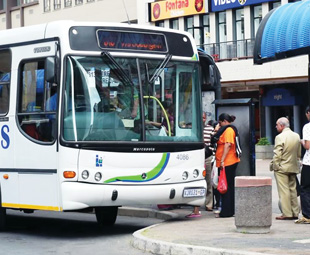
History has shown that in the past the City of Johannesburg was enthusiastic about advice given to it regarding public transport. So why the decline? And when will we see action again?
Being on pension means I have been able to start trawling through about 30 000 pages of public transport documents, reports, newspaper cuttings, theses and conference proceedings, collected over a period of 50-plus years.
The oldest is a 1927 Durban tram timetable. The second oldest is the 1934 Spencer Commission report on the City of Johannesburg (CoJ) transport department. After 81 years, it remains the best public transport advice ever given to, and taken by, the city. Actually, the report wasn’t even that good – it’s merely that much of the “research” since then has been mediocre, while the CoJ has stonily ignored good advice.
The new government took over in 1994. It’s had 21 years to start fixing the mess, but, sadly, it has merely continued to churn out reports containing nausea-inducing words … “Strategic, integrated and holistic” and, since 2006, the term “catalytic” – now being applied to various projects, including bus rapid transit (BRT) in a number of cities.
Perhaps “paralytic” would be more appropriate. As I write, a BRT drivers’ strike in Johannesburg is now entering its sixth week. That’s more than ten percent of a year. Any serious public transport researcher will tell you that once people have been forced to use other modes for an extended period, many don’t come back.
(After the last, record strike for BRT – of eight weeks, back in 2011 – it took at least six months for it to recover).
We need to get worried. Whatever the reasons for the strike, the response from the authorities is hardly encouraging. Lisa Seftel, the long-standing executive director for transport in the CoJ, says the process of “formal takeover” of the latest BRT roll-out should be concluded during the first six months of this year.
That’s scary. We need to question these drawn-out BRT management takeovers. Apart from the huge cost and inconvenience of rebuilding our streets, how long will it take to roll out Gauteng’s 740 km of busway? How many taxi associations will we have to pacify?
Then there is the member of the CoJ mayoral committee for public transport, Christine Walters, who has appealed “for patience from commuters”. No, Christine, that’s not good enough – commuters won’t wait for you to get your act together. On the CoJ website you describe your portfolio as an “all boys club”. It would be nice to see the women showing us male dinosaurs how to run things, but I’m not too hopeful.
In 2009, I advised your predecessor, Rehana Moosajee, to back off BRT and focus on fixing Metrobus (Business Day August 26, 2009). She paid no attention, so I’m repeating myself.
In 1993, I remember the first female operations director of Metrobus, Jenny Gray, asking for extra time to “stabilise” the service before introducing some desperately needed reforms. These never happened and Metrobus has continued its long decline. Perhaps Transport Minister Dipuo Peters needs to read this as well.
Who benefits from this mess? Definitely not the general public, but I can think of three groups that might.
First, the construction lobby. The BRT bus lanes, stations and buses have been built and will have to be paid for, no matter whether they stand empty or not.
Second, the fuel industry. Hardly any cars have been taken off the road by BRT in the CoJ so far, but crawling along in a congested lane, right next to an empty BRT lane, increases my fuel consumption by 25 to 30 percent.
Third, the taxi bosses and even some government and municipal officials (remember the city managers at Buffalo City). Do any of them have one foot in the informal taxi industry and another foot in the guaranteed-income BRT business? It’s all very well firing 150 BRT drivers, but will any BRT “managers” be scaling down on their SUVs?
We are in for a bumpy ride, and this column does not claim to have all the answers, except to say that there are simpler, cheaper and faster ways to address public transport problems.
Getting hopelessly entangled in “paralytic” projects is not the way to go. Men have a shorter life expectancy than women, and I’d like to see some action before I die.
Vaughan Mostert developed a love for public transport early in life, which led to a lifelong academic interest in the subject. He recently retired as a senior lecturer from the Department of Transport and Supply Chain Management at the University of Johannesburg. Through Hopping Off, Mostert leaves readers with some parting food for thought as he continues his push for change in the local public transport industry.
Published by



focusmagsa